How to Create a Brunch Menu That Elevates Your Cafe
Brunch can change the trajectory of a cafe. It raises average check size, attracts guests who linger, fills late morning and early afternoon seats, and gives your brand more personality than a standard breakfast or lunch offer ever could. Yet plenty of brunch menus underperform because they try to be everything at once. They become a crowded mix of eggs, toast, burgers, salads, pancakes, bowls, and cocktails without a clear point of view. The result is slower service, higher waste, confused guests, and a menu that feels familiar in the least useful way.
A strong brunch menu does something more disciplined. It meets the expectations people bring to brunch, comfort, indulgence, shareability, and a bit of occasion, while still making sense for your kitchen, your staff, and your margins. That balance is where good cafes separate themselves from the pack. The guests may remember the ricotta hotcakes or the chili crisp eggs, but what keeps the operation healthy is the invisible work underneath: cross-utilized ingredients, smart station design, sensible prep, and a menu mix that sells.
If you want brunch to elevate your cafe, start by treating the menu as both a hospitality tool and a business system.
Start with the role brunch should play in your cafe
Before naming dishes, clarify what brunch is supposed to do for your business. A neighborhood cafe with a compact kitchen and steady weekday coffee trade needs a different brunch strategy than a destination cafe that thrives on weekend lines and social buzz. If brunch exists to increase frequency among regulars, the menu should feel approachable and easy to return to. If the goal is to raise your profile and draw a wider radius of guests, a few signature items need real visual appeal and a point of difference.
I have seen operators make the same costly mistake more than once: they build a brunch menu around what they personally love to eat, then discover those dishes do not fit their kitchen or their customer flow. A beautiful shakshuka served in cast iron may be compelling on paper. If it takes too long to fire, ties up burners, and arrives inconsistently during a rush, it hurts more than it helps. Brunch is not just a creative exercise. It is a service model.
That means your first questions should be practical. How many covers do you expect between 10 a.m. And 2 p.m.? How many cooks are on the line? How many menu items can your team execute cleanly when every table orders eggs? Can the bar or coffee station handle espresso drinks, batch beverages, and brunch cocktails without bottlenecking the floor?
The menu has to answer those questions before it tries to impress anyone.
Build around a clear brunch identity
The most memorable brunch menus usually have a center of gravity. Guests may not describe it this way, but they feel it immediately. Some cafes lean produce-forward and seasonal. Others focus on bakery-driven brunch, where the pastry case and bread program shape the meal. Some become known for rich, satisfying plates with strong savory flavors, while others win with lighter dishes that still feel generous.
Without that center, menus drift. You end up with a little bit of diner, a little bit of bistro, and a little bit of health cafe, none of it distinct enough to stick. A better approach is to choose a lane broad enough to be profitable but narrow enough to create recognition.
If your cafe already has a strong weekday identity, use that as the base. A cafe known for excellent sourdough should let that bread anchor its brunch. A cafe with a strong coffee culture may do especially well with pairings, house syrups, and brunch pastries that complement the beverage program. A cafe with an open kitchen and polished plating might lean into composed dishes that justify a premium price.
Identity also comes through naming, garnish, and restraint. Guests do not need ten versions of avocado toast. They need one that is clearly yours, perhaps with preserved lemon labneh, pickled shallots, and seeds toasted in-house. That is more powerful than a page of minor variations.
Design a menu that sells, not just one that reads well
One of the biggest differences between an attractive brunch menu and a profitable one is menu mix. You need dishes at different price points and labor levels, but they should all feel coherent. There should be a reason each item exists.
A useful way to think about the menu is to balance guest expectation, kitchen effort, and margin. Egg dishes often anchor the category because guests expect them, but eggs alone rarely create excitement. Pastries may have excellent margins if your bakery program is strong, yet they cannot carry brunch without savory options that feel substantial. Grain bowls and salads can serve health-minded guests and control food cost, but too many light items make the menu feel thin or forgettable.
This is where operators often overload the menu. They fear saying no. They add a Benedict, a scramble, an omelet, French toast, pancakes, a breakfast sandwich, a burger, a salad, a grain bowl, smoked salmon toast, biscuits and gravy, chicken and waffles, and then a few vegan and gluten-free substitutes. The guest sees abundance. The kitchen sees chaos.
A tighter menu usually performs better. Fewer items create faster ticket times, more consistent plating, simpler prep, and easier inventory control. They also help your guests decide. That matters more than many owners think. When people come for brunch, they often arrive in groups and order socially. If the menu is too sprawling, decision time slows down table turns and weakens the guest experience.
A smart menu often includes these five functional categories:
- one or two signature savory plates that define the cafe
- one egg-forward classic with your own twist
- one sweet item that photographs well and eats well
- one lighter or produce-driven option
- one highly portable or handheld item for solo diners and quick turns
Those categories are not rules, but they keep the menu balanced. More importantly, they push you to think in terms of function rather than personal preference.
Make signature dishes earn their place
Every cafe wants a dish people talk about. The problem is that signature dishes often become expensive vanity projects. They use too many unique ingredients, require specialized plating, or rely on fragile components that collapse during a rush. A true signature item should be memorable and operationally sound.
The best signature brunch dishes usually do one of three things. They reinterpret a familiar brunch format with stronger flavor. They showcase one exceptional housemade element. Or they create contrast, hot and cold, crisp and creamy, rich and acidic, in a way that makes guests feel they are eating something special without struggling to understand it.
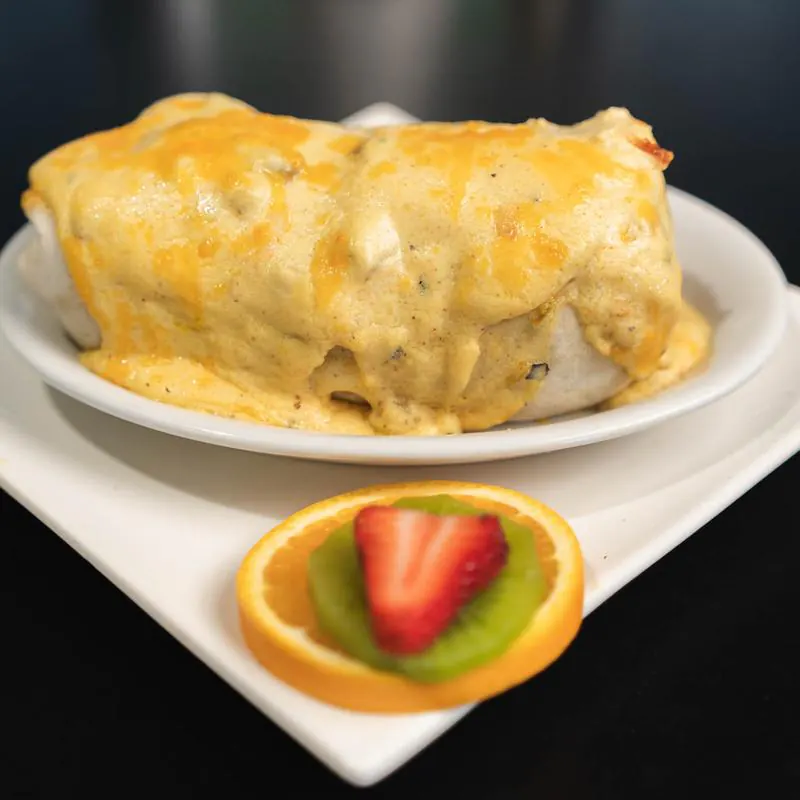
Take a breakfast sandwich as an example. It is common, but it can still become a signature if the details are disciplined. A soft house bun, a properly seasoned egg, good melted cheese, a bright sauce, and a crisp element such as hash brown or fried shallots can turn an ordinary item into the dish people return for. It also travels well from the pass to the table and can be assembled quickly under pressure.
The same principle applies to sweet dishes. French toast is not exciting because it exists. It becomes compelling when the bread is right, the soak is balanced, the topping has texture, and the sweetness is controlled. Guests want indulgence, but they also want relief from one-note sugar. A spoon of cultured cream, roasted fruit, citrus zest, or salted nuts can save a sweet dish from feeling flat.
A good test is simple. If you removed the garnish and the menu description, would the dish still be excellent? If not, keep working.
Price with honesty and confidence
Pricing brunch can be awkward because guests often compare it with both breakfast and lunch. They may accept a premium for ambiance and quality, but they still notice when a plate feels padded with greens to justify the cost. Value perception matters as much as food cost.
The cleanest approach is to make the plate feel complete at the listed price. If every dish depends on two or three add-ons to satisfy the guest, you create friction. Add-ons are useful, of course. Bacon, smoked salmon, avocado, extra toast, or a side salad can raise check averages. But the core dish should still feel intentional and finished.
In practice, that means portioning carefully and using ingredients where they matter most. Guests are quick to spot false generosity. A mountain of undressed leaves beside a tiny egg dish does not read as value. A smaller plate with excellent potatoes, thick-cut toast, and a properly dressed side salad often does.
Watch the labor side as closely as the ingredient side. Brunch menus can look profitable on paper while bleeding through prep hours and service strain. A dish with a favorable food cost can still be a bad seller if it monopolizes a station. The operators who succeed with brunch usually know the real cost of each plate, not just the theoretical one.
Engineer the menu for cross-utilization
Cross-utilization is the quiet hero of profitable brunch. When one component works across pastry, savory plates, sandwiches, and beverages, you lower waste and simplify purchasing without making the menu feel repetitive.
Think in components rather than isolated dishes. Roasted tomatoes can appear on a toast, alongside eggs, and in a grain bowl. A whipped herb yogurt can support a vegetable plate, a breakfast sandwich, and a side of crispy potatoes. House pickles can brighten rich dishes across the board. Good jams can move from pastry service to sweet brunch plating.
This does not mean every dish should taste the same. It means your pantry should work hard for you.
I once reviewed a weekend menu for a small cafe that had twenty-eight distinct perishable ingredients used only once. The menu looked exciting. The waste report was brutal. By replacing a few niche garnishes and consolidating sauces, the team reduced spoilage, cut prep time, and actually made the food taste more focused. Guests did not miss the extra complexity. They noticed that the dishes came out faster and more consistently.
Respect the realities of eggs, bread, and potatoes
Brunch menus rise and fall on fundamentals. Eggs must be cooked correctly every time. Bread must be fresh, properly cut, and suitable for the dish. Potatoes, whether roasted, fried, smashed, or hashed, need seasoning and texture. If these basics are weak, no amount of creative branding will rescue the experience.
Eggs deserve special attention because they expose inconsistency quickly. Poached eggs in particular can sink a brunch service if the team is not trained and the workflow is sloppy. If your kitchen struggles with poached eggs under volume, it is better to remove them than to serve a flawed Benedict all weekend. There is no shame in designing around what your team can execute well.
Bread is equally consequential. Too many cafes treat toast as filler. Guests do not. One thick slice of excellent bread, grilled or toasted with care and served hot, changes how the entire plate is perceived. It can carry spreads, absorb sauces, and make a modest dish feel generous. Cheap bread does the opposite.
Potatoes matter because they often deliver comfort, value, and craveability in one place. They are also one of the first things to go limp or bland when standards slip. Taste them every Cafe service. Then taste them again during the rush, because that is when the problem usually appears.
Give equal thought to drinks
A brunch menu is not only food. Beverage strategy often determines whether the shift becomes truly profitable. Coffee is obvious, but many cafes leave money on the table by failing to connect beverage choices to the meal.
Start with pace. Guests ordering brunch tend to stagger drinks. They may begin with coffee, then add juice, sparkling water, or a cocktail once food arrives. Your menu should support that behavior. Offer beverages that feel tailored to brunch without overwhelming the bar or espresso machine.
Batching helps. A well-made seasonal spritz, house bloody mix, or cold brew variation can speed service and keep quality steady. The same goes for nonalcoholic options. A bright citrus soda, a spiced iced tea, or a shrub-based refresher gives guests something celebratory without requiring a full bar program.
The most successful cafes also understand pairing intuitively. Rich dishes need acid and bitterness nearby. Sweet dishes benefit from balanced coffee options and not just sugary lattes. If your staff can suggest one or two pairings naturally, average checks rise without any hard sell.
Write descriptions that sound appetizing and clear
Many brunch menus fail at the final step: they do not communicate the food well. Either the wording is too sparse and guests cannot picture the dish, or it is overloaded with every component, making the plate sound more complicated than appealing.
The sweet spot is clarity with appetite appeal. Name the format, highlight the key ingredients, and signal the flavor profile. If a dish is spicy, say so. If the sweetness is restrained, that can be useful too. People come to brunch with expectations, and good descriptions help them order confidently.
There is also a practical angle. Strong menu language can steer demand toward dishes you want to sell. If one plate has better margins, better throughput, and wide appeal, give it the clearest, most appealing description on the page. Do not hide your best operational items behind dull copy.
Keep an eye on visual layout too. Dense blocks of text make brunch feel heavier before the guest even orders. White space, category structure, and a logical sequence matter. Most guests scan before they read.
Build flexibility without turning the line into a custom-order factory
Guests increasingly ask for substitutions, dietary swaps, and modifications. Some flexibility is part of hospitality, especially in a cafe environment where regulars expect a personal touch. But unlimited customization can break service and damage dish integrity.
Set boundaries that still feel generous. Make a few substitutions easy and predictable. If your kitchen can support gluten-free bread, vegetarian protein swaps, or dairy alternatives, state that clearly. If major changes compromise the dish, train staff to explain that graciously.
This is where menu architecture helps. Dishes built from adaptable components can meet different needs without inviting endless improvisation. A produce-driven bowl can accommodate several dietary patterns more easily than a tightly composed plate with multiple sauces and textures. That does not mean every menu should chase universality. It means you should know where flexibility lives and where it does not.
A short internal service checklist can keep this under control:
- identify which dishes can absorb common substitutions without slowing the line
- train servers on how to guide guests toward those dishes
- price premium add-ons consistently
- flag allergy-sensitive items clearly in the kitchen
- review recurring modification requests each month for pattern changes
That last point is important. If guests keep asking to add avocado, remove dairy, or swap potatoes for greens, they are giving you menu development data for free.
Test in service, not just in prep
A dish can taste excellent in a quiet tasting and still fail completely in real brunch conditions. Testing has to include volume, timing, plating durability, and recovery after delays. A hollandaise that breaks under heat lamps, greens that wilt too quickly, or pancakes that toughen while waiting for the rest of the ticket are all service problems, not recipe problems.
Run mock tickets if you can. Fire five or six of your key brunch dishes at once and see what happens. Measure the actual time to plate. Watch the handoff between stations. Taste the food after it sits for three or four minutes. That is closer to the guest experience than a chef tasting at the pass.
This is also the stage where portioning should be challenged. Some dishes look generous on a plate but eat light. Others feel heavy halfway through. Brunch diners usually want satisfaction without the sense that they need a nap at noon. If every dish leaves people overly full, return visits suffer. If every dish feels small, resentment sets in. The right middle is often narrower than owners expect.
Use seasonality with discipline
Seasonality can make a brunch menu feel alive, but only if it is handled carefully. Constantly changing too many dishes can overwhelm purchasing, confuse regulars, and weaken your best sellers. On the other hand, a menu that never changes starts to feel stale, especially in a cafe that depends on repeat visits.
The best rhythm is usually stable structure with rotating accents. Keep your core categories and proven sellers. Then refresh select garnishes, fruit components, soups, pastries, or a monthly special based on what is available and worth buying. This gives guests novelty without forcing the kitchen to relearn the menu every few weeks.
Seasonality should also reflect actual flavor and quality, not just a marketing instinct. There is no virtue in forcing a spring pea dish if the product is inconsistent, or in using out-of-season berries simply because they sound brunch-friendly. Guests may not know the wholesale market, but they can taste when a menu is built around ingredients at their best.
Train the floor to sell the experience
Even a well-designed brunch menu can underperform if the staff presents it passively. In a cafe setting, service is often more relaxed than in full-service restaurants, but that does not mean it should be casual about selling. Guests want guidance, especially when they are deciding between a sweet plate and a savory one, or whether to add a second round of drinks.
Servers should know more than ingredients. They should know which dishes are hearty, which ones skew bright and fresh, which can be modified easily, and which pair well with specific beverages. They should also know the pacing of the kitchen. Steering a guest toward a faster dish when the line is backed up can save a table from frustration.
This kind of training pays off in subtle ways. It reduces returns, builds trust, and helps your signature items gain traction faster. It also supports consistency across shifts, which is crucial if brunch is going to elevate the cafe rather than just create weekend noise.
Pay attention to what the room is telling you
Once the menu launches, the real work begins. Watch sales mix, of course, but also listen to what guests leave on the plate. Notice what gets photographed, what gets reordered, and what causes hesitation at the table. Ask your team where tickets stall. Look at waste after each service. Small clues accumulate into useful decisions.
Some of the strongest menu improvements come from modest adjustments. A sweeter jam balanced with more acid. A larger plate to improve presentation. A side salad replaced with dressed herbs. A dish moved higher on the menu. Toast served pre-cut instead of whole. None of those changes sound dramatic. All of them can move the experience forward.
That is the real secret of an elevated brunch menu. It is rarely one genius idea. It is a series of smart decisions, made with taste and operational discipline, repeated until the menu feels effortless to the guest and sustainable to the team.
When that happens, brunch stops being just another daypart. It becomes one of the clearest expressions of what your cafe does well. Guests feel it in the room, on the plate, and in the pace of service. They stay longer, spend more freely, and tell other people where they went. That is not luck. It is the result of a menu built with intention.
Bennies Cafe
17230 Jackson Creek Pkwy Ste 100, Monument, CO 80132
+1 719-445-0660
FAQ About Cafe
What is considered a café?
A café is generally an informal place to enjoy refreshments and a meal. Bennies Cafe in Monument serves breakfast and lunch in a counter-service setting, with options including eggs Benedict, sandwiches and crepes. Guests can eat in or arrange pickup.
What is the difference between a coffee shop and a café?
The terms often overlap. A coffee shop usually emphasizes coffee and other drinks, while a café may offer a broader food menu. Check the individual establishment's menu rather than relying on its name. Bennies Cafe offers coffee drinks alongside breakfast and lunch dishes.
What is the difference between café and coffee?
In everyday English, a café is a place where people buy food and drinks, while coffee is the beverage. The word café comes from the French word for coffee. Bennies Cafe serves options such as brewed coffee, espresso and lattes as part of its drinks menu.